

Virtual Office Guide
Three Things Make You Look Real. None of Them Is a Logo.
A real address, a phone a human answers, and somewhere to meet. What a new Tucson business needs first.
Plenty of Tucson businesses start in a spare bedroom off Speedway, and most of them stay there longer than they planned.
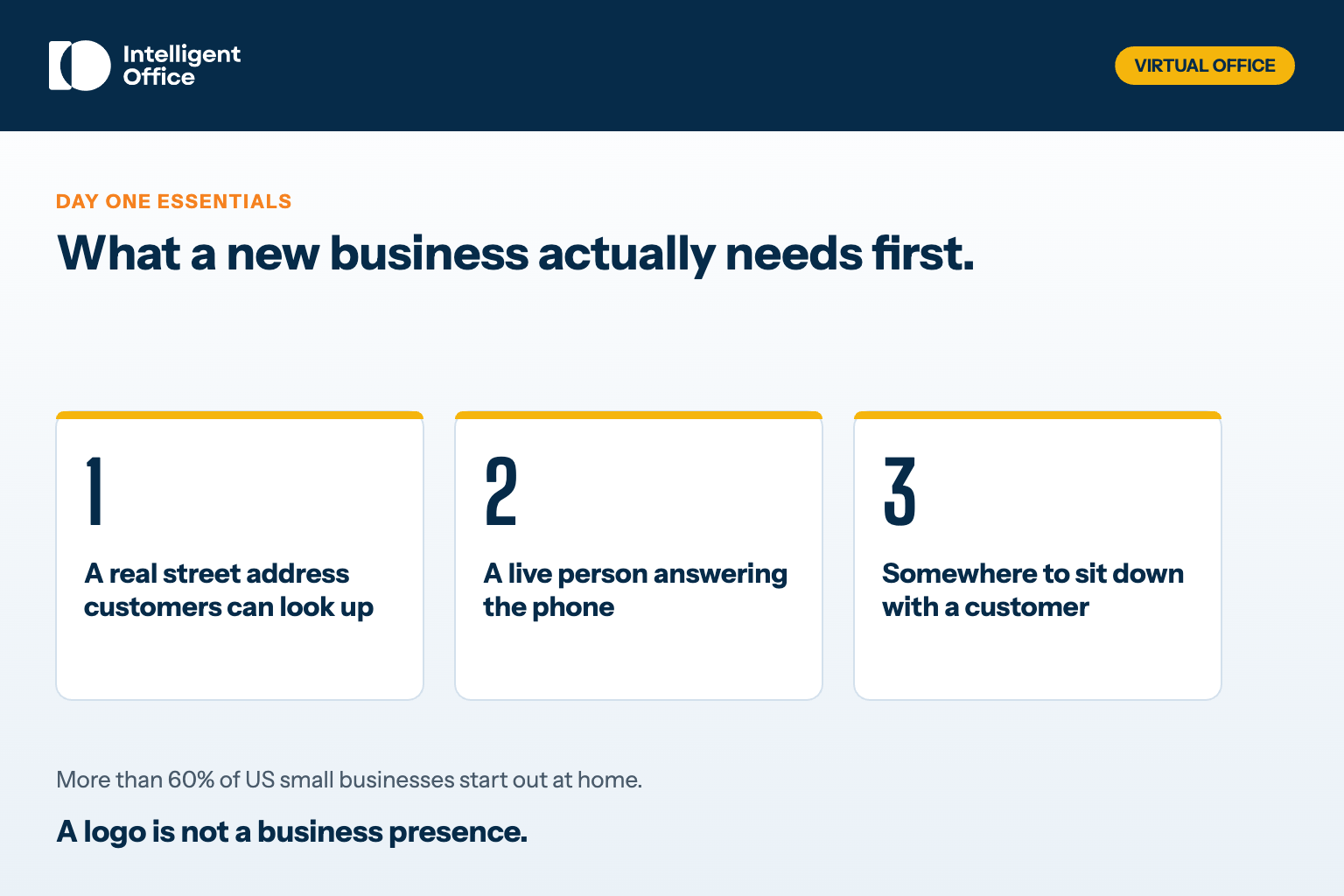
New owners spend the first month on the things that feel like starting a business: the name, the logo, the website. Customers are running a shorter checklist. They want to know where you are, whether you will answer when they call, and whether they can sit down with you if it matters.
By the Numbers
Where Do New Businesses Actually Start?
More than 60% of US small businesses are home based, and for a new service business that is usually the right financial call. The trade-off is presentation. Customers calling a home based business reach a personal cell, cannot hear you over kids or pets in the background, or land in voicemail. On address, either you are advertising a PO Box or using your home address, neither of which screams professionalism.
What Do Customers Check First?
Customers check three things in about ten seconds. They look for a real street address, which tells them you are established and local. They listen for a person answering the phone, which tells them what your service will feel like after they pay. And they look for somewhere to meet, which matters for anything involving a contract, a document, or a decision worth real money. A website answers none of these convincingly on its own.
Start Here
The Phone Is the One That Earns Money on Day One
An address makes you findable and a meeting room makes you credible, but the phone is where revenue actually happens. It is the first live conversation anyone has with your business, and on day one there is no brand to fall back on. A person who answers, listens, and books the appointment converts the interest your marketing produced. Nothing else on the list does that.
On the Ground in Tucson
What a New Tucson Business Is Judged On
Tucson is an affordable place to start something, which is why so much of the local economy runs out of homes and trucks. It also means your competition looks the same on paper, so small signals separate you. A real Tucson address, a person answering during monsoon season when everybody is calling at once, and a meeting room for the customer who wants to sign paperwork somewhere other than a driveway.
The Solution
What This Costs to Solve Properly
Intelligent Office costs far less than an office and a hire. A virtual office bundles a real street address with mail handling and access to meeting rooms, and live phone answering puts a trained person on your business line from 8 to 5. Our receptionists answer your business calls, screen out solicitations, and can book the appointment when the customer calls. If your customers call in the evening, extended coverage is available as a paid add-on.
- A real street business address instead of a PO Box or your home
- A live person answering your business calls from 8 to 5
- Meeting rooms to reserve when a customer wants to sit down
- Mail handling, so business post stays out of your kitchen
Watch
What a Virtual Office Includes
This short clip walks through the Intelligent Office virtual office membership: the address, the mail, the meeting space, and the answering that goes with it.
Limited Time Phone Answering Offer
Local Phone Answering for Just $99!
Get 100 minutes of professional, local phone answering from Intelligent Office Tucson for only $99. Our local team helps your business sound polished, responsive, and ready to grow.
| Claim My 100 Min Offer |
Why Intelligent Office Tucson Is Built Around Real People
Intelligent Office Tucson gives a new business the three things customers check on day one. Our Tucson team is staffed by real receptionists who answer your business calls, we provide a real street address and handle your mail, and you can reserve a meeting room when a customer wants to sit down. The whole operation feels and looks established from the first week.
Sources
Home based business share comes from the US Small Business Administration Office of Advocacy. Call handling figures come from published missed call research and TransUnion consumer phone channel research.

